Deprecated: Function WP_Dependencies->add_data() was called with an argument that is deprecated since version 6.9.0! IE conditional comments are ignored by all supported browsers. in /home/selfhelp/public_html/wp-includes/functions.php on line 6131
Self-Help Archives - Page 10 of 10 - Self-Help, Spirituality & Self-Esteem

Andrew Johnston, Britain’s Got Talent, Pie Jesu


Andrew Johnston, Singer One Voice

Andrew Johnston took the stage at Britain’s Got Talent one year after Paul Potts’ audition. Just like Potts before him and Susan Boyle after him he produced something unexpected.

As the contestants always say, following what you love is one way of overcoming low self-esteem.

If you feel you don’t have a passion or a talent then my advice is to be curious what yours is and keep being curious until it shows up. You will be doing yourself and the world a service.

I like this clip as I believe we all have some extraordinary talent or aptitude that lies latent within. This video is also quite moving.

Acts Of Random Kindness, Random Acts Of Kindness To Help Low Self-Esteem

You Do Acts
Of Random Kindness

You Feel Good

Acts of random kindness by you have an amazing power to transform how you feel and to help low self-esteem.

You might wonder, ‘how does an action so self-less have the power to make YOU, the one doing the kindness, feel good’?  It seems counter-intuitive doesn’t it?  After all you are not receiving the kindness from others but rather you are doing something for nothing!

What Are The Benefits?

The benefits to you of being kind are;

  • increase feel-good chemicals in your brain
  • a sense of being worthwhile
  • a feeling of belonging
  • adding meaning to your life
  • knowing you made a difference
  • help low self-esteem

Why Does It Feel Good?

kindness-two-women

Have you ever noticed that in a tragedy or natural disaster such as an earthquake or tsunami, people join together and a sense of community and togetherness transpires?  A sense of coming together to look after each other transcends even your most basic needs.  It is because in those moments you are conscious of belonging to something bigger than yourself and you put others and the whole before yourself.  That is when we naturally perform acts of random kindness without selfish thought.

Have you ever had the unfortunate experience of attending a funeral of someone who died seemingly tragically or too young? Yet for a time, maybe a day or two before the funeral until a day or two after, you experience a resolve and togetherness with everyone effected.  It is a somewhat empowering and strong deep-down feeling that is a glimmer of ‘we will be OK, together’.

Examples

Here is a story from a book The Power of Intention by Dr W. Dyer.  It is a story from his daughter Sommer and appears on pages 69-70.

I had an opportunity to extend kindness at the supermarket one day when I had my cart filled to the top with food that my roommate and I would share over the next two weeks.  The woman behind me had an antsy toddler and not nearly as much in her cart as I had.  I said to her, “Why don’t you go first?  You don’t have as much as I do.”  The woman looked at me as if I’d just sprouted extra limbs or something.  She replied, “Thank you so much.  I haven’t seen many people around here be thoughtful of another person. We’ve moved here from Virginia and are considering moving back because we’re questioning whether this is the right place to raise our three children.”  Then she told me that she was about ready to give up and move back home, even thought it would create huge financial strain on her family.  She said, “I’d promised myself if I didn’t see a sign by the end of today, I was going to demand that we move back to Virginia. You are my sign.”

Why Do It?

Acts of random kindness by you, and to a lesser extent received by you, foster and heighten a sense of togetherness.

One of our most basic feelings that drive our actions and thoughts is to belong.  We want to belong to something, anything, it doesn’t matter what we just want to be accepted and together.  When we are at school we want to be part of a group of friends.  We want to be invited to join in.

When you perform random acts of kindness, with absolutely no thought of what is in it for you – that part is crucial – you yourself experience a similar feeling to the belonging, togetherness and resolve that we normally only experience in moments of tragedy.

What Are The Pitfalls?

One warning though; if you go out and practice random acts of kindness, or any kindness, and you know deep down you are doing this to get something in return, this is not kindness by you but rather it is an exchange.  It is a trade between you and them or you and the universe.  You are intending to swap your kindness for some personal selfish benefit.

You might think, ‘if I do this they will be obliged to do something for me.’  Or you might think you are banking karma believing the universe will bring great stuff your way soon in exchange for your kindness.

Acts of random kindness are unique in that they are devoid of any thought of ‘what is in it for me?’  Either you are kind or you are trading, there is nothing in between.  Like everything it is your intention and attitude that provides the benefit to your experience.

Acts Of Random Kindness Family Birthday Celebration

During the cleanup of a natural disaster or tragedy your intention and attitude will not be I am doing this because I will get…

You are doing it to help another ‘just because you can’.  This is the recommended attitude you hold as you perform acts of random kindness for your fellow human beings.  It feels good and your life automatically, straight away, suddenly has meaning, just from that one act of kindness.

If ever there was a quick way to help low self-esteem, this is it.  Even if you feel that you have good self-esteem you jump to the next level if you adopt this attitude of being kind to others for no other reason than just because you can.

7 Human Emotions, List Of Emotions, Primary Emotions

What To Do With The 7 Human Emotions

Below I list 7 human emotions, describe how and why the arise within
you and what you can do about these primary emotions.

You can become an expert at understanding emotions and how to control
emotions so you stay conscious, still experience whatever you do, but
have it affect your life so much less.

1. Anger

Why do you get angry?  You don’t choose to get angry but something
gets triggered within and boom, there it is…Photo: Woman Angry

  • energizing you
  • tensing your arms and fists
  • arising up your centre and gushing out your mouth if
    you let it go

Anger is the energy that says ‘that is not OK with me, my boundary has
been crossed, I feel I have lost control of my freedom.’

2. Sadness

Sadness is the response to having lost something or empathizing with
someone elseGirl Sad who has lost something.  This ‘thing’ that you have
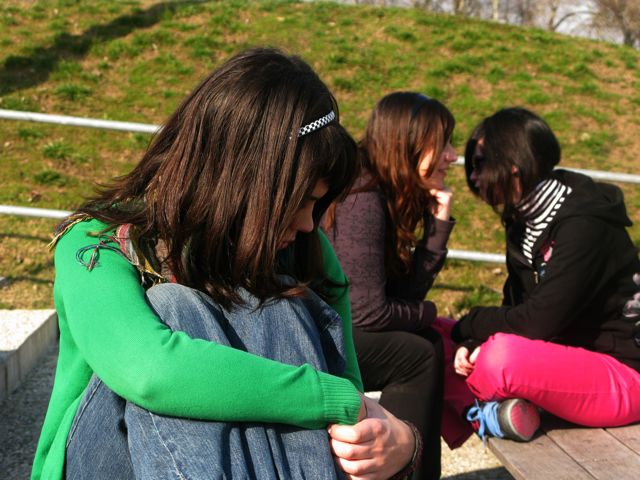
lost could be an object, hope, a vision or a birthright (nurturing,
love).  It can also arise from noticing something you don’t have
that others do have.  For example envy is a positive experience
but when accompanied by thoughts of jealousy or ‘poor me’ it turns
negative.

3. Grief

Grief is similar to sadness in that it arises in reaction to a
perceived loss.  However, I Woman Grief Sad Alone

will distinguish it from sadness by
saying that grief is a whole different scale of loss.  This is
more about losing something that you identified as part of you, rather
than losing something you have.

We all have a self-image and that self-image includes relationships you
are involved in.  So grief in my opinion is what is felt when the
energy connection to another being is broken.  This could be an
animal also of course.

4. Fear

Fear is having a vested interest in something not happening, presumably
because it threatens you in some way, not only physically but threatens
your image or possessions.  When you care about something not
happening you will feel afraid.  For example if you were prepared
to experience anything, even death, you would not feel fear.

Fear is so prevalent in our lives because we live from our sense of
being separate, isolated and an object.  If we experienced ourself
as part of the one whole union of souls and saw how life really worked,
we would not be so attached to events happening or not happening and
fear would not be an experience I propose.

5. Shame

I don’t think shame is considered to be a primary emotion in that it is
not something that all humans feel for the same reasons.  By that
I mean what might make someone feel shame might not make someone else
feel shame.

Shame is based on an individual’s conditioning.  Someone might
feel ashamed about their sexual desires while another might love their
desires and explore them with great openness and wonder.

Shame is a negative feeling in reaction to something you are or think
you are.

6. Worry

Probably not a genuine primary emotion but rather an activity. 
Nevertheless it does not feel good.

Worry is a mental activity of persistently thinking about something
that might go wrong.

The only good thing about worry is that once the incident has passed
without coming to fruition you will feel like the weight of the world
has been lifted from your shoulders.

7. Guilt

Similarly to shame I would not call this a primary emotion but rather a
reaction to conditioning.  Different to shame in that rather than
being a reaction to being who you are guilt is a reaction to something
you have done.

If you do something which goes against your morals and ethics you will
feel guilty.  This unpleasant feeling is designed to prevent you
from doing that thing again.

What You Can Do

One of the most empowering discoveries people make is to learn why
emotions arise and that by changing your thoughts, attitudes and what
the events in your life mean to you, you can change how you feel.

For example living in the ‘now’ as they say will reduce fear and
worry.  Doing shadow-work
and discovering who you are with acceptance will reduce shame and guilt.

These
are the 7 human emotions that you might find to be most prevalent
in your life.  You are not helpless and at the mercy of emotions,
there are many more than these 7 human emotions.  You can do
plenty towards understanding emotions and how to control
emotions by looking at how and when they arise.